
Could Banyan Tree Mount Emei Be the Brand’s Best Luxury Resort in Greater China?
After several quieter additions to its China portfolio, Banyan Tree Mount Emei may finally be the standout opening the brand has been waiting for.
Banyan Tree has expanded rapidly across China in recent years, but not every new property has made the impact expected from one of Asia’s most recognisable luxury resort brands.
Banyan Tree Dongguan Songshan Lake, for example, marked the brand’s debut in Guangdong in 2024. Despite its lakeside setting and extensive resort facilities, the opening remained relatively under the radar outside its immediate market. Other recent additions have similarly expanded Banyan Tree’s footprint without necessarily giving travellers a compelling new reason to visit the destination.
Banyan Tree Mount Emei feels different.
Officially opened on August 1, the resort sits at the foot of UNESCO-listed Mount Emei in Sichuan, just over an hour by high-speed train from Chengdu. As Emeishan’s first international luxury resort, it arrives in a destination where nature, wellbeing, cultural heritage and spiritual retreat are already deeply connected.
Here, the hotel does not need to manufacture a destination story. Mount Emei already provides one.
Why Mount Emei Is a Natural Fit for Banyan Tree
Mount Emei is both a UNESCO World Cultural and Natural Heritage Site and one of China’s Four Sacred Buddhist Mountains. For centuries, its forests, temples and mountain paths have attracted pilgrims and travellers in search of reflection and a closer connection with nature.
This makes it an unusually natural fit for Banyan Tree.
Privacy, wellbeing, spirituality and a strong sense of place are not concepts that need to be manufactured here. They already belong to the mountain.
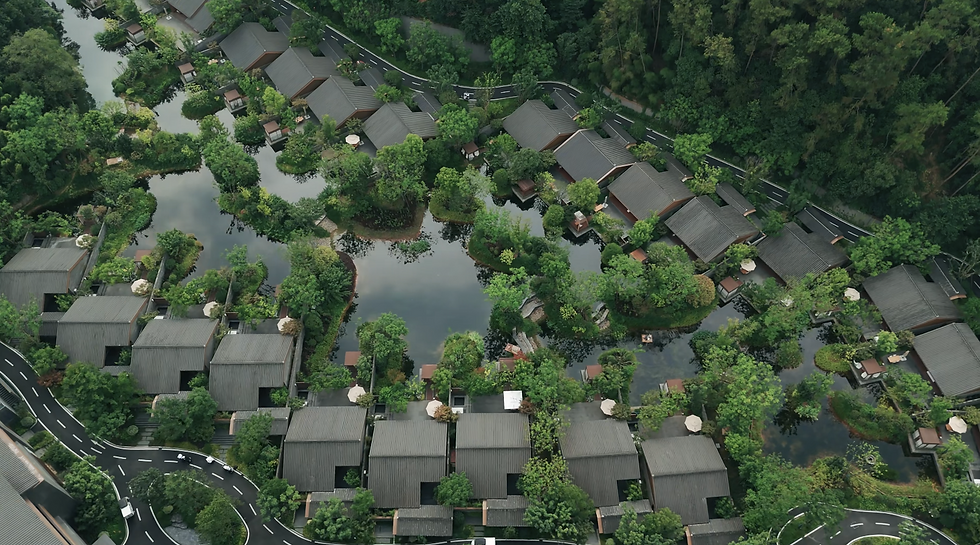
Beyond its understated entrance, a winding driveway leads guests through dense woodland towards the resort. Inspired by the architectural traditions of western Sichuan, its low-rise buildings unfold among forest, bamboo and water features, sitting quietly within the surrounding landscape.
It feels less like an isolated resort development and more like a contemporary interpretation of the traditional mountain retreat.

Private hot springs in every room
Banyan Tree Mount Emei features 130 rooms and villas across three principal accommodation categories: Mountain View Rooms, Garden Villas and Lakeside Villas.

Every room and villa includes its own private outdoor hot spring pool. Depending on the room type, the pool may be positioned on a mountain-facing balcony or within a secluded private courtyard.
This combination of privacy, natural hot springs and forest views gives the resort a strong sense of retreat. Guests can spend the day exploring Mount Emei and return to a private bathing experience surrounded by mist, trees and mountain air.
The property also includes Banyan Tree Spa, restaurants, an indoor swimming pool, a fitness centre and spaces dedicated to yoga and wellbeing.

Banyan Tree Mount Emei for Meetings and Incentive Travel
Although the property has clear appeal for luxury leisure travellers, it also introduces new possibilities for small and medium-sized corporate groups, executive retreats, incentive programmes and private celebrations in Sichuan.
The resort offers more than 1,200 square metres of flexible indoor and outdoor event space, including a 500-square-metre ballroom. The spaces can accommodate meetings, brand events, cultural gatherings, gala dinners and celebrations in a setting that feels far removed from a conventional city hotel.

For international groups, the destination lends itself particularly well to programmes combining:
Private hot-spring and wellness experiences
Guided Mount Emei hikes and nature exploration
Buddhist culture and visits to historic temples
Tea, calligraphy or meditation sessions
Sichuan cuisine and destination dining
Executive meetings and intimate brand events
The resort is also only around five minutes by car from Emeishan High-Speed Railway Station, making it accessible from Chengdu while still delivering a strong sense of escape.
A new side of luxury travel in China
The opening reflects a broader shift in China’s luxury hospitality landscape.
Today’s high-end travellers are increasingly looking beyond landmark hotels and major city centres. They are seeking properties that offer privacy, cultural depth, wellbeing and a meaningful connection with the destination.

A return to what Banyan Tree does best
Banyan Tree Mount Emei brings together the elements today’s luxury travellers increasingly value: privacy, wellbeing, cultural depth and a meaningful connection with the destination.
For leisure travellers, it offers a restorative mountain escape. For event and incentive planners, it adds a distinctive new option to China’s growing portfolio of destination-led luxury resorts.
But what makes this opening particularly convincing is the relationship between the brand and the place. Mount Emei does not simply provide a beautiful backdrop for another luxury hotel. Its forests, Buddhist heritage, hot springs and contemplative atmosphere give the resort an identity that feels both authentic and difficult to replicate elsewhere.

After several quieter additions to its China portfolio, Banyan Tree Mount Emei feels like a return to what the brand does best: creating retreats whose appeal begins with the destination itself.
It may be too early to call it the best Banyan Tree in Greater China—but on paper, it is certainly one of the brand’s most compelling openings in years.

Comments